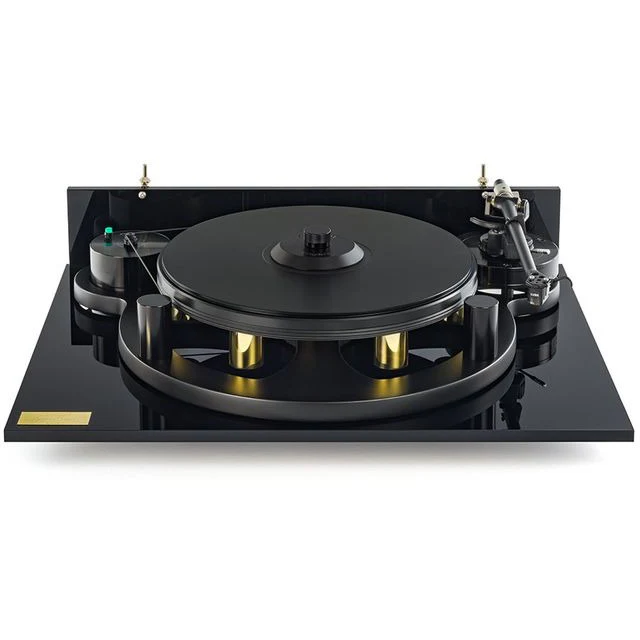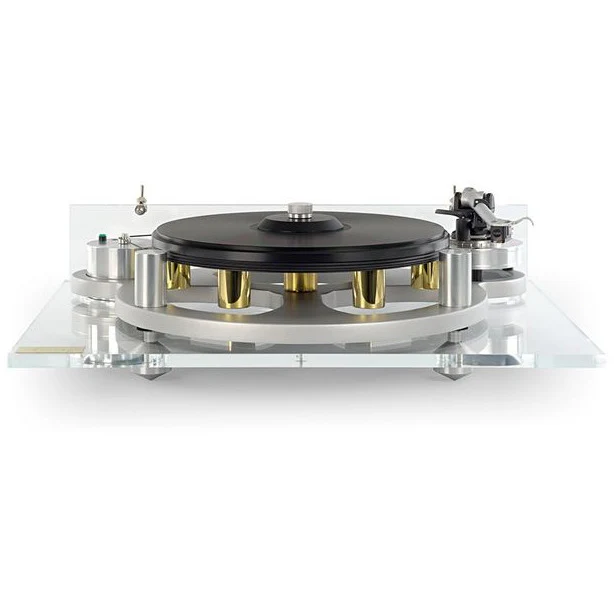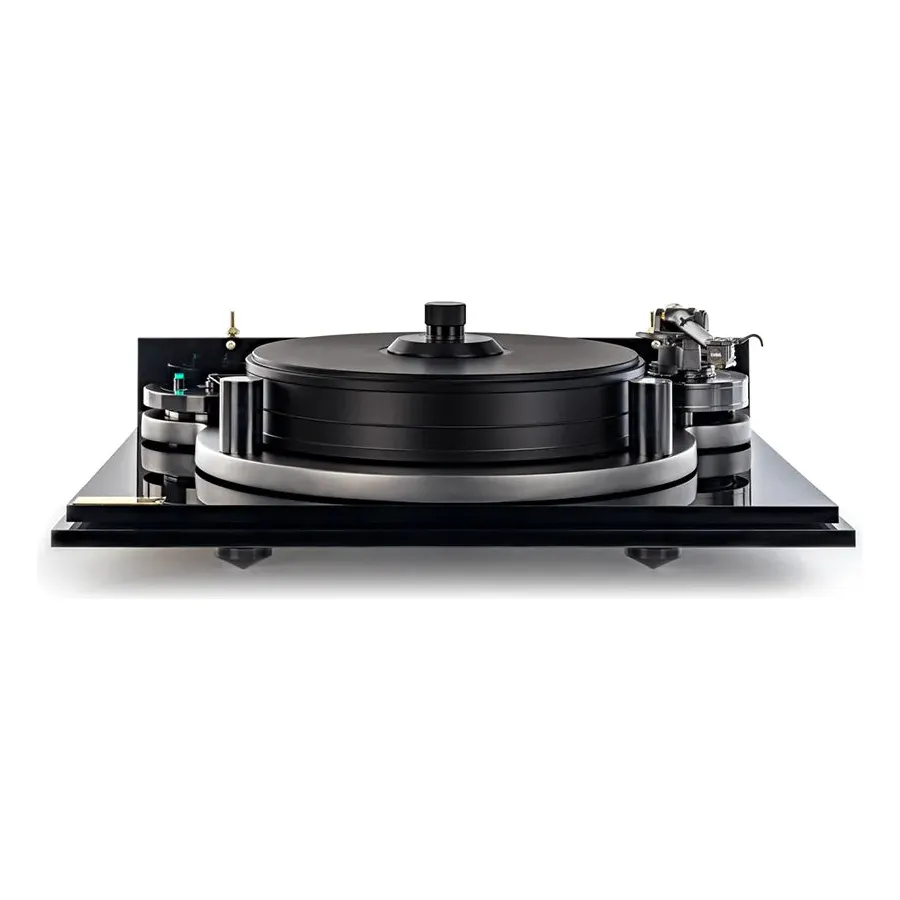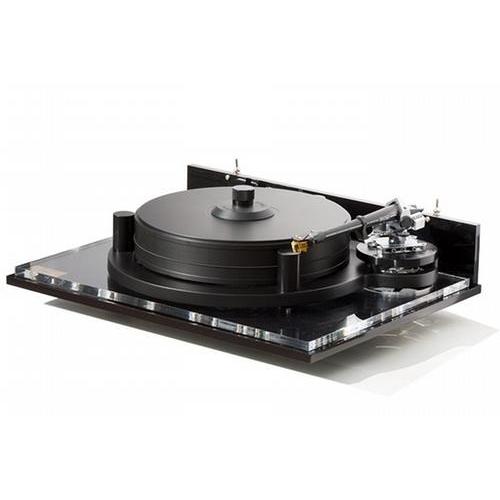

Titanic Audio Tidal Axis Platter Upgrade System
Control the Interface. Control the Outcome.
Every turntable system is defined by a single mechanical boundary.
Where the record meets the platter.
Most platters—whether aluminium, acrylic, or composite—are single-material structures.
They store energy, resonate at specific frequencies, and release it back into the record.
A platter cannot eliminate its own resonances.
It can only pass them on.
A Platter Upgrade System
This is not a mat.
It is a multi-material interface system, designed to sit between record and platter and fundamentally change how energy behaves at that boundary.
Rather than relying on a single material, it distributes control across multiple layers—each engineered to manage a different aspect of vibrational behaviour.
Five-Layer Energy Control Architecture
At the core of the design is a multi-material laminate structure, with each layer engineered to perform a specific mechanical function within the system.
High-Density Structural Polymer Layer
A precision-machined amorphous polymer foundation establishes a rigid, low-resonance interface with the platter, suppressing structural ringing and maintaining mechanical stability under load.
Constrained Viscoelastic Interface
Constrained viscoelastic interfaces, utilising 3M 300LSE adhesive technology, regulate energy transfer between layers and reduce resonance propagation through the structure.
Cellular Composite Damping Core
A natural anisotropic cellular material provides broadband damping, breaking up standing waves and controlling mid-band resonance without introducing loss of energy or character.
Secondary Viscoelastic Control Layer
A further viscoelastic interface limits energy reflection and prevents re-transmission within the laminate structure, maintaining directional control of vibrational energy.
HEX-DNA™ Micro-Cellular Contact Surface
A precision-engineered micro-cellular surface incorporating proprietary HEX-DNA™ geometry stabilises the record while dissipating high-frequency micro-vibrations at the point of contact.
Beyond Single-Material Limitations
Single-material platters operate within a narrow band of damping behaviour.
They absorb some frequencies, amplify others, and store energy that is released back into the system over time.
This includes parasitic vibrations introduced by motor drive systems, bearing noise, airborne energy, and stylus feedback.
A multi-layer, multi-material structure behaves differently.
Energy is interrupted, distributed, and dissipated across multiple material boundaries.
Resonance is controlled before it can develop.
Parasitic vibration is absorbed and prevented from re-entering the record interface.
Engineered as a System
Mass provides stability.
Viscoelastic interfaces control energy transfer.
Cellular structures manage resonance and contact behaviour.
No single layer defines the performance.
The structure operates as a unified system.
Designed as a Core Component
Compatible with all standard 12-inch platters.
This is not an accessory or finishing touch.
It is a platter upgrade, designed to operate as part of the turntable’s mechanical architecture.
Result
Lower mechanical noise.
Greater signal integrity.
More of the recorded performance, retrieved without interference.
Product Information
Product Information
Shipping & Returns
Shipping & Returns
Description
Control the Interface. Control the Outcome.
Every turntable system is defined by a single mechanical boundary.
Where the record meets the platter.
Most platters—whether aluminium, acrylic, or composite—are single-material structures.
They store energy, resonate at specific frequencies, and release it back into the record.
A platter cannot eliminate its own resonances.
It can only pass them on.
A Platter Upgrade System
This is not a mat.
It is a multi-material interface system, designed to sit between record and platter and fundamentally change how energy behaves at that boundary.
Rather than relying on a single material, it distributes control across multiple layers—each engineered to manage a different aspect of vibrational behaviour.
Five-Layer Energy Control Architecture
At the core of the design is a multi-material laminate structure, with each layer engineered to perform a specific mechanical function within the system.
High-Density Structural Polymer Layer
A precision-machined amorphous polymer foundation establishes a rigid, low-resonance interface with the platter, suppressing structural ringing and maintaining mechanical stability under load.
Constrained Viscoelastic Interface
Constrained viscoelastic interfaces, utilising 3M 300LSE adhesive technology, regulate energy transfer between layers and reduce resonance propagation through the structure.
Cellular Composite Damping Core
A natural anisotropic cellular material provides broadband damping, breaking up standing waves and controlling mid-band resonance without introducing loss of energy or character.
Secondary Viscoelastic Control Layer
A further viscoelastic interface limits energy reflection and prevents re-transmission within the laminate structure, maintaining directional control of vibrational energy.
HEX-DNA™ Micro-Cellular Contact Surface
A precision-engineered micro-cellular surface incorporating proprietary HEX-DNA™ geometry stabilises the record while dissipating high-frequency micro-vibrations at the point of contact.
Beyond Single-Material Limitations
Single-material platters operate within a narrow band of damping behaviour.
They absorb some frequencies, amplify others, and store energy that is released back into the system over time.
This includes parasitic vibrations introduced by motor drive systems, bearing noise, airborne energy, and stylus feedback.
A multi-layer, multi-material structure behaves differently.
Energy is interrupted, distributed, and dissipated across multiple material boundaries.
Resonance is controlled before it can develop.
Parasitic vibration is absorbed and prevented from re-entering the record interface.
Engineered as a System
Mass provides stability.
Viscoelastic interfaces control energy transfer.
Cellular structures manage resonance and contact behaviour.
No single layer defines the performance.
The structure operates as a unified system.
Designed as a Core Component
Compatible with all standard 12-inch platters.
This is not an accessory or finishing touch.
It is a platter upgrade, designed to operate as part of the turntable’s mechanical architecture.
Result
Lower mechanical noise.
Greater signal integrity.
More of the recorded performance, retrieved without interference.